Terminal Gate 1: Flowing (Optimal)
Inland Barge Service: Active Mile 2 connection
Next Vessel Arrival: GRIMALDI SHANGHAI (ETA 29/05)
ISPS Compliance: Level 1 Security Certified
Customs Command: Dedicated In-Terminal Station Active

Facilities & Infrastructure

Two deep-water berths and 535 metres of quay at Tin Can Island, a 100-strong owned equipment fleet, and the largest waterfront off-dock bonded terminals in Nigeria at Mile 2.

Main Terminal — Tin Can Island

The PTML main terminal occupies approximately 230,000 square metres at the western end of the Tin Can Island Port Complex, accessible directly from the Apapa–Oshodi Expressway and from Apapa via Liverpool Road. The terminal operates its own dedicated gates, separate from common-user port access, which materially simplifies truck entry, container delivery and empty returns.

Marine infrastructure comprises two deep-water berths providing 535 metres of continuous quay: Berth 11 at 335 metres with 13.5 metres draft, and Berth 12 at 200 metres with 12.0 metres draft. The berth configuration accommodates the largest RoRo multipurpose vessels deployed in the West African trade, including the Grimaldi G5 class of 290 metres length overall — the largest Con-Ro vessels ever to call in the region. Berth 11 has been extended twice, in 2014 and 2021, and a further expansion of over 100 metres of berthing length is planned before the end of the decade to accommodate the next generation of G6 vessels.

The yard is organised into dedicated areas for containers (with 40 reefer plugs), vehicles and rolling units, and general and project cargo, supported by a 3,500 square metre covered warehouse, on-terminal offices for PTML and the resident regulatory authorities, and dedicated delivery gates.
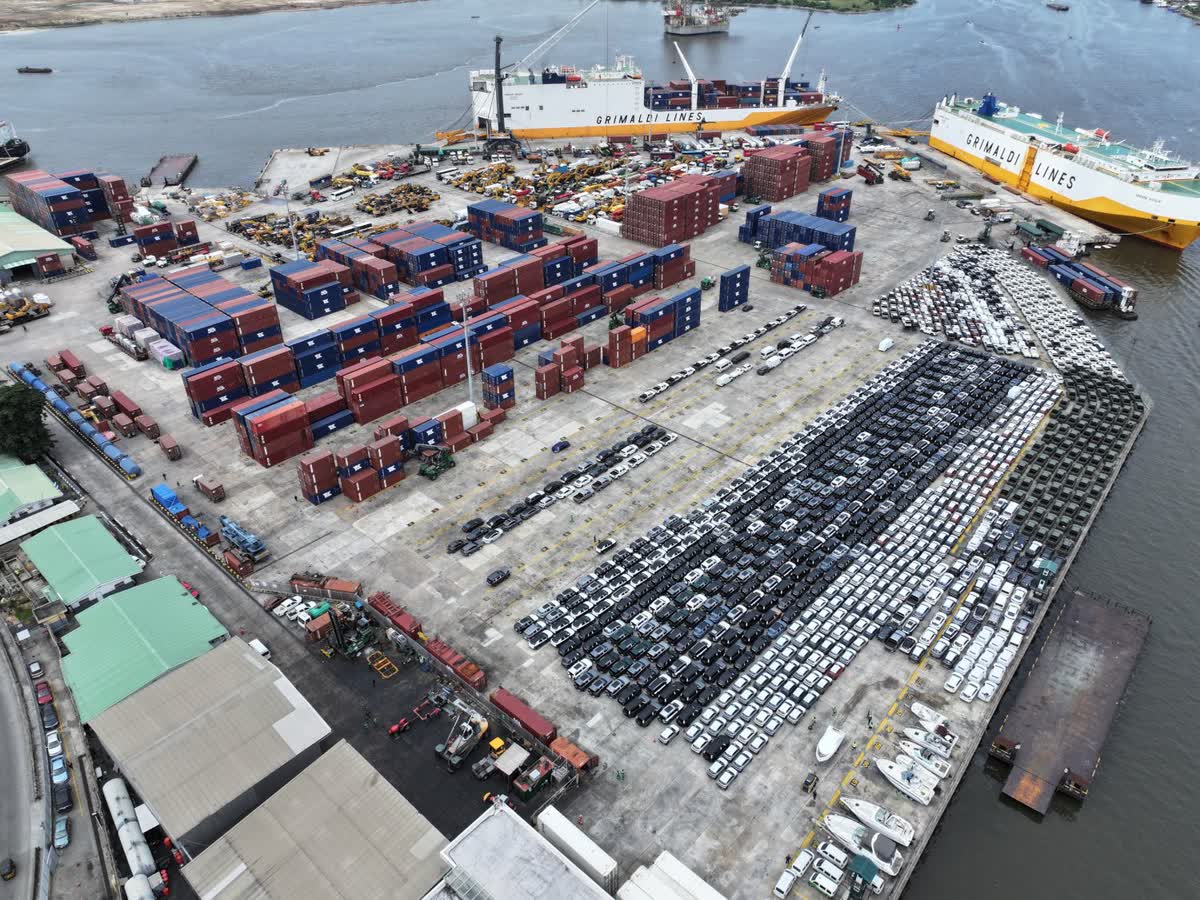
Aerial view of the PTML main terminal at Tin Can Island, with Grimaldi Con-Ro vessels alongside the deep-water berths, container stacks and vehicle rows in the yard
PTML main terminal, Tin Can Island — 535 metres of deep-water quay across Berths 11 and 12.

Mile 2 — Off-Dock Bonded Terminals

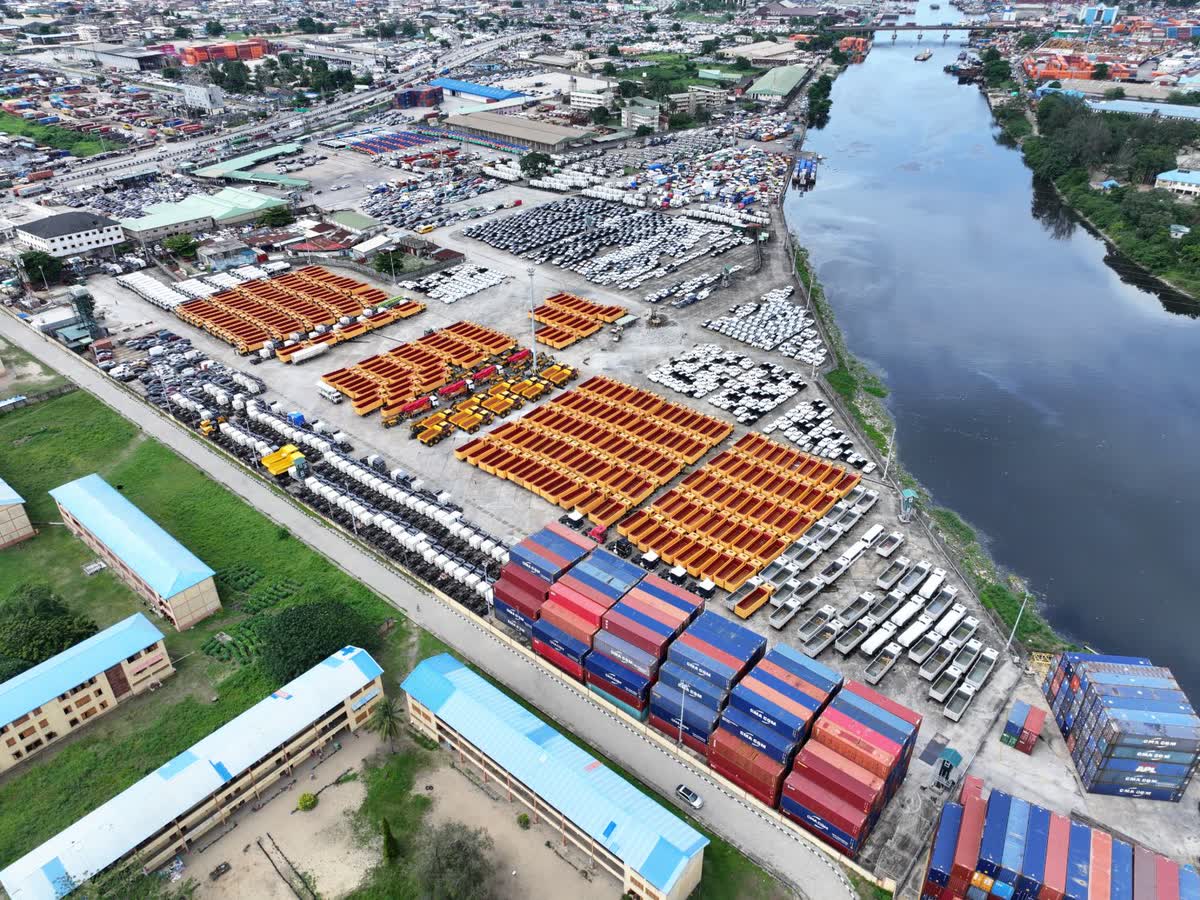
PTML operates the largest waterfront off-dock bonded terminal facilities in Nigeria: two terminals in the Mile 2 area of Lagos covering, in aggregate, more than 250,000 square metres, with 200 metres of waterfront, three dedicated barge berths and a 3,500 square metre warehouse.

Mile 2 was originally developed to receive the rapidly growing import of vehicles into Nigeria and to relieve the chronic congestion of the Lagos port corridor, at a time when no space existed within the main port to hold them. Since its opening it has been widely appreciated by importers and the automotive trade, and it has been expanded repeatedly — most recently through a 50,000 square metre area allocated by the Lagos State Government, which extended the facility to stretch between two of the principal arteries of Lagos, the Apapa–Oshodi Expressway and the Badagry Expressway. Today Mile 2 is no longer only a vehicle terminal: it is a fully fledged bonded import terminal for containers, an export consolidation point, and a base for warehousing and value-added services, allowing customers to complete their entire port process away from port traffic.

The two terminals operate under two separate commands of the Nigeria Customs Service — the PTML Command and the Apapa Command — a configuration unique in Nigeria that gives shippers the flexibility to route cargo under whichever bill of lading and customs command they prefer.

The link between Tin Can Island and Mile 2 is operated by a dedicated fleet of high-capacity barges and tugs, able to transfer over 1,000 vehicles per day to Mile 2 and over two hundred 40-foot containers per day. PTML is the only terminal operator in Lagos offering this multimodal waterborne connection from its berths to its own bonded off-dock facility — an arrangement that has measurably relieved pressure on port access roads since 2018, including the movement of full export containers by barge.

Aerial view of the PTML Mile 2 off-dock bonded terminal on the Lagos waterfront, with tipper bodies, vehicles and container stacks along the barge berths
PTML Mile 2 — over 250,000 square metres of bonded off-dock capacity with 200 metres of waterfront.

Port Infrastructure Specs

Technical dimensions detailing our berth lengths, drafts depth, and gantry crane networks.

Terminal Operating Framework Build, Operate and Transfer (BOT) Concession
Main Terminal Area (Tin Can Island) 230,000+ sqm
Deep-Water Quay (2 Berths) 535 m — Berth 11: 335 m · Berth 12: 200 m
Quay Draft Depth 13.5 m (Berth 11) · 12.0 m (Berth 12)
Container Capacity Up to 200,000 TEUs / year · 40 reefer plugs
Vehicle Capacity (with Mile 2) Up to 400,000 units / year
Owned Equipment Fleet 100+ units — reach stackers, forklifts, tractors, cranes
Largest Mobile Harbour Crane 600-tonne Liebherr — the largest operating in Lagos

Dedicated Customs Command

PTML is the only port terminal in Lagos with its own resident command of the Nigeria Customs Service, operating from offices inside the terminal. Examinations are scheduled on-site and containers are positioned for examination within 24 hours of request.

ISPS Code Compliance

Access only through 21 biometric turnstiles, monitoring by over 200 CCTV cameras 24 hours a day, and a dedicated force of more than 500 security officers, with full cargo traceability from discharge to gate.

Mile 2 Off-Dock Terminals

The largest waterfront off-dock bonded facilities in Nigeria — over 250,000 sqm with three barge berths — linked to Tin Can Island by a dedicated fleet of barges moving over 1,000 vehicles and 200+ containers per day, away from port traffic.

An owned fleet of more than 100 units

PTML owns and operates a modern port equipment fleet of more than 100 units, maintained in-house and dimensioned to work RoRo, container, break bulk and project cargo simultaneously.

Reach Stackers 13 units
Forklifts 40 units from 3 to 32 tonnes — equipped for all container and general cargo types
Terminal Tractors & Towing Trucks 28 terminal tractors · 8 towing trucks
Utility Loaders (Bobcat) 20 units
Mobile & Crawler Cranes 600-tonne Liebherr mobile harbour crane, acquired in 2024 and the largest operating in Lagos · 200-tonne mobile crane · 250-tonne crawler crane
Marine Fleet 6 tugboats · 4 high-capacity barges (40 × 25 m, 1,000-tonne class)

The West African hub of the Grimaldi network

PTML is the West African hub of the Grimaldi network and is served by scheduled multipurpose Con-Ro services connecting Lagos with four continents.

Northern Europe

Weekly service.

Mediterranean

Every ten days.

North & South America

Every ten days.

Far East

Fortnightly service, including the first direct Con-Ro connection between Shanghai and Lagos, inaugurated in 2025.

Through the Grimaldi network and transhipment over PTML, Nigerian importers and exporters reach an extensive global port network with a single bill of lading. The terminal is equally open to vessels of all other operators for general cargo, break bulk and project shipments. The current vessel schedule is published and updated on this site.

How the terminal runs

Published standards, not aspirations. PTML is the most automated terminal in West Africa — invoicing, payment, examination booking, release and gate processes are executed digitally, end to end.

Berthing

More than 90% of vessels berth on arrival; no vessel waits more than 24 hours.

Customs Examination

Containers positioned for examination within 24 hours of request.

Container Delivery

Delivery within 2 hours of presentation of a valid Terminal Delivery Order.

Automation

Every commercial transaction — invoicing, payment, booking, release — completed digitally.

Break Bulk Productivity

1,200 tonnes per hook per shift (jumbo bags, steel, machinery).

Vessel Turnaround

A 40,000-tonne break bulk vessel discharged in 14–16 days.

Barge Transfer

Over 1,000 vehicles per day to Mile 2; over 200 × 40-ft containers per day.

Trucker Access Guidelines

To ensure high safety standards and expedite gate turn-around speeds, all truck drivers entering the PTML yard must comply with these protocols:

  • 1. Biometric Entry: Drivers must have a valid biometric gate access card linked to an active container booking.
  • 2. Safety Gear: Full PPE is mandatory inside the port terminal (helmet, steel-toe boots, high-visibility vest).
  • 3. Speed Limits: Maximum speed limit is strictly set to 10 km/h within container stack tracks.
  • 4. Driver Stay: Drivers must remain inside their cabins during stack crane loading or unloading operations.

Carrier & Vessel Directives

Ocean carrier operators calling the PTML terminal must coordinate with the marine office adhering to pre-arrival standards:

  • 1. Berth Allocation: Berth nominations must be submitted 72 hours prior to vessel ETA through the port portal.
  • 2. Import Manifests: Full digital import manifests must be transmitted to Nigeria Customs and PTML 48 hours before arrival.
  • 3. Stowage Plans: Vessel load and discharge stowage plans must be shared in EDI format.
  • 4. Marine Operations: Pilotage is handled by Nigerian Ports Authority (NPA) harbor pilots. PTML provides dedicated berthing tugboats.

Digital Services

Every routine interaction with PTML can be completed online. Registered agents and importers can generate cost estimates, receive and pay invoices through a secure payment platform connected to all Nigerian banks, book customs examinations, print interchange and release documents, locate vehicles and containers in real time, request refunds and lodge claims — without visiting the terminal.

Access to e-services requires one-time agent registration, completed electronically. Step-by-step guides for each service are provided on the respective pages.

Published procedures for gate, payment and claims

PTML operates to written, published procedures. The pages in this section set out, step by step, how to enter the terminal, how to pay, how examinations are booked, and how cargo is released — including the documents required at each stage and the standard to which PTML commits. If any officer or process deviates from a published procedure, report it through the contacts on each page.

Claims

PTML takes responsibility for cargo in its custody. If your cargo is found damaged or short at delivery, a claim can be lodged online through the e-services portal.

To be processed, a claim must be lodged before the cargo leaves the terminal or, at the latest, within the period stated in the applicable terminal conditions, and must include: the bill of lading, the delivery document noting the damage or shortage, photographs taken at the point of discovery, and a statement of the amount claimed with supporting invoices.

Each claim receives a reference number on submission and a substantive response within a defined period. Claims supported by complete documentation are resolved fastest; the single most common cause of delay is cargo removed from the terminal before the damage was recorded.

PTML in Numbers

475,000 sqm

Combined terminal area — Tin Can Island main terminal and Mile 2 bonded off-dock terminals.

535 m

Deep-water quay across two berths — with over 100 m of additional berthing length planned for the G6 generation.

100+

Vessel calls per annum (111 in 2025).

200,000+

Cargo units handled in 2025 — vehicles, containers, general and project cargo.

113,000+

Vehicles and rolling units handled in 2025; over 200,000 per annum at peak; capacity up to 400,000.

85,000 TEUs

Container throughput 2025 (capacity up to 200,000 TEUs).

600 t

Liebherr mobile harbour crane — the largest operating in Lagos — within a fleet of 100+ owned units.

₦420bn+

Customs revenue generated through the PTML Command in 2025.

1,000+

Direct employees, with 3,000 further support personnel.

Port Gate Procedures

Follow the official step-by-step gate protocol to ensure smooth transit times, cargo security, and quick turnarounds.

1

Pre-Arrival ATL

Register container details and secure a digital Authority to Load (ATL) or ERA gatepass online.

2

Biometric Scan

Present driver biometric card at entry kiosk. Auto-camera scans truck registration plates.

3

Customs Check

Drive through the in-terminal container scanner or dedicated customs exam bay.

4

Yard Loading

RTG crane loads container onto the chassis. Driver remains inside the truck cabin at all times.

5

Gate-Out & EIR

Clerk checks seal integrity, prints the paper EIR, and opens the exit gate barriers.